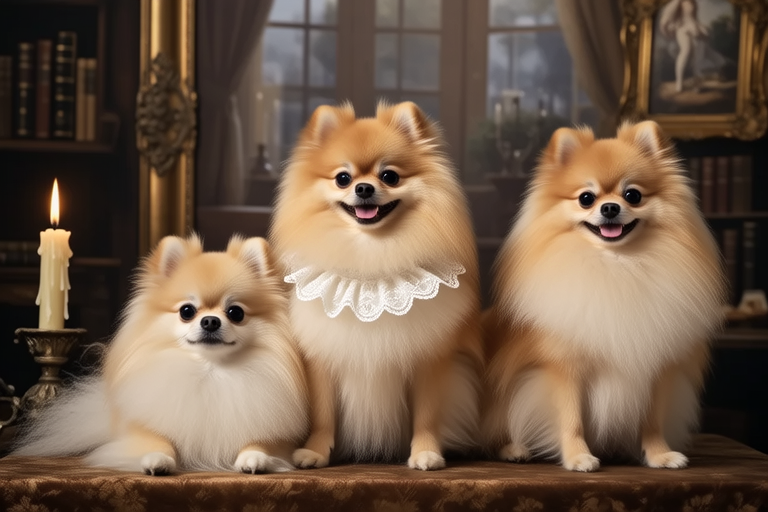
The Evolution of Pomeranians: From Working Dogs to Beloved Companions
Pomeranians, one of the most popular toy breeds today, have a rich and fascinating history that traces back to their origins as larger working dogs in ancient times. This article explores the evolution of Pomeranians from their initial roles as herding and sled-pulling dogs to their current status as cherished companions. We will highlight key historical periods and figures that influenced their development, including their association with European royalty, and discuss the physical and temperamental changes over centuries that made them ideal companions.
Origins and Early History
The Pomeranian’s roots can be traced back to the Pomerania region, which spans parts of modern-day Germany and Poland. These early Pomeranians were much larger than the dogs we know today, often weighing between 30 to 50 pounds, and were used primarily for herding sheep and pulling sleds. They were also known for their resilience and adaptability, thriving in the harsh climate of Northern Europe. The breed’s early history is marked by its practical uses, reflecting the functional roles that dogs played in human society during this period.
Association with European Royalty
The transition of Pomeranians from working dogs to companion animals began in the 18th century when they caught the attention of European royalty. Queen Charlotte of Mecklenburg-Strelitz, wife of King George III of England, was instrumental in popularizing the breed. She imported several Pomeranians to Britain, and her love for the breed helped establish it among the upper classes. However, it was Queen Victoria who truly transformed the Pomeranian into the small, fluffy dog we recognize today.
Queen Victoria had a particular fondness for the breed and owned several Pomeranians, the most famous being a red sable named ‘Marco.’ Under her influence, breeders focused on reducing the size of the Pomeranian while enhancing its coat and color variations. Her preference for smaller dogs led to the establishment of a new standard for the breed, which emphasized elegance and refinement over functionality.
Physical and Temperamental Changes
The transformation of Pomeranians from large working dogs to small, elegant companions involved significant physical and temperamental changes. Over time, selective breeding reduced their size dramatically, with modern Pomeranians typically weighing between 3 to 7 pounds. Their coats became longer and more luxurious, with a wide range of colors and patterns, including orange, black, white, and cream.
In terms of temperament, Pomeranians retained many of the traits that made their ancestors successful working dogs, such as intelligence, alertness, and loyalty. However, their smaller size and increased focus on companionship led to the development of a more affectionate and playful nature. Today, Pomeranians are known for their lively personalities, making them excellent companions for families and individuals alike.
Cultural Roles and Notable Events
Pomeranians have held significant cultural roles throughout history, particularly in Europe. In addition to their association with royalty, they have been featured in art and literature, symbolizing elegance and refinement. For instance, the poet William Wordsworth mentioned his Pomeranian in his writings, highlighting the breed’s place in high culture.
Significant events that impacted the popularity and breeding practices of Pomeranians include the World Wars. During these periods, many breeds experienced a decline in numbers due to food shortages and other challenges. However, the Pomeranian’s small size and adaptability allowed it to survive and even thrive during these difficult times. After the wars, there was a renewed interest in pet ownership, leading to an increase in the popularity of Pomeranians and other small breeds.
Transition to Companion Animals
The transition of Pomeranians from functional roles to purely companion animals reflects broader societal changes regarding the relationship between humans and animals. As industrialization and urbanization progressed, people sought out smaller, more manageable pets that could fit into their increasingly busy lives. The Pomeranian’s diminutive size and charming personality made it an ideal choice for city dwellers, and its popularity continued to grow.
Today, Pomeranians are cherished pets in modern households, providing companionship and joy to millions of owners worldwide. Their adaptability, intelligence, and affectionate nature make them well-suited for a variety of living situations, from apartments to suburban homes. Additionally, their small size and minimal exercise requirements make them accessible to people of all ages and fitness levels.
Conclusion
The evolution of Pomeranians from large working dogs to small, beloved companions is a testament to the power of selective breeding and the changing needs of human society. From their origins in the harsh climates of Northern Europe to their current status as cherished pets, Pomeranians have adapted to serve different purposes throughout history. Their association with European royalty, along with their physical and temperamental changes, has contributed to their enduring popularity. Today, Pomeranians remain cherished pets in modern households, offering companionship, loyalty, and joy to their owners.
