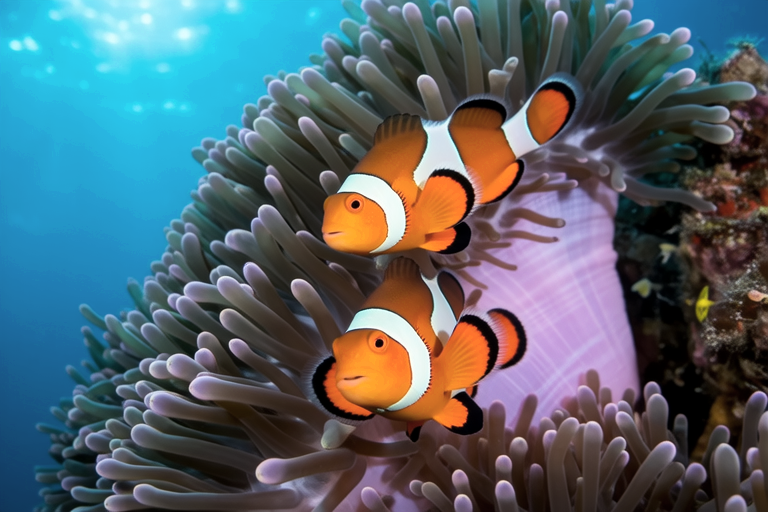
The Symbiotic Relationship Between Clownfish and Anemones
Imagine a vibrant coral reef teeming with life, where colorful fish dart in and out of intricate structures. Among these, a small, striking orange fish flits around, seemingly at home among the tentacles of a sea anemone. This is the iconic pairing of the clownfish and the sea anemone, one of nature’s most fascinating and mutually beneficial relationships. This article delves into the intricacies of this symbiosis, exploring how each species benefits from the other, the unique behaviors they exhibit, and the environmental conditions necessary for their coexistence. We’ll also touch on their roles in marine ecosystems and the challenges they face in both the wild and captivity.
A Mutualistic Partnership
The relationship between clownfish and anemones is a classic example of mutualism, where both parties benefit from the association. The clownfish, also known as anemonefish, gain protection from predators by living within the anemone’s tentacles, while the anemone benefits from the nutrients provided by the clownfish.
Protection for Clownfish: Sea anemones possess stinging cells called nematocysts, which they use to capture prey and defend themselves. However, clownfish have developed a special mucus layer on their skin that protects them from the anemone’s stings. Over time, this adaptation has allowed the clownfish to live safely within the anemone’s tentacles, providing a safe haven from larger predators like moray eels and triggerfish.
Benefits for Anemones: In return, the anemone receives several advantages. Clownfish help aerate the water around the anemone by fanning their fins, which can enhance the anemone’s ability to photosynthesize. Additionally, clownfish feed on parasites and dead tissue from the anemone, keeping it healthy. They also attract potential prey for the anemone by swimming around its tentacles, increasing the chances of the anemone capturing food.
Unique Behaviors Within the Partnership
The clownfish-anemone relationship is not just about survival; it’s also marked by unique behaviors that strengthen their bond. One such behavior is the way clownfish clean the anemone. By removing debris and dead tissue, the clownfish ensure that the anemone remains healthy and attractive to potential prey. Another interesting behavior is the way clownfish fan their fins near the anemone’s tentacles, helping to circulate water and oxygenate the surrounding area. This behavior not only benefits the anemone but also creates a more hospitable environment for the clownfish.
Clownfish also exhibit territorial behavior towards other clownfish and potential threats. They will fiercely defend their anemone from intruders, even chasing away larger fish that might pose a threat. This territoriality ensures that the anemone remains undisturbed and continues to provide a safe home for the clownfish.
Environmental Conditions Necessary for Coexistence
For clownfish and anemones to thrive together, specific environmental conditions must be met. Both species require warm, shallow waters with strong currents to bring in food and oxygen. These conditions are typically found in coral reefs, which are some of the most diverse and productive ecosystems on Earth. Coral reefs are often found in tropical and subtropical regions, where water temperatures range from 23°C to 29°C (73°F to 84°F).
Another crucial factor is the availability of suitable anemone hosts. Not all anemones can host clownfish, and clownfish are generally selective about which anemones they choose. Some common anemone species that form symbiotic relationships with clownfish include Heteractis magnifica (the carpet anemone), Stichodactyla gigantea (the giant carpet anemone), and Entacmaea quadricolor (the bubble-tip anemone). These anemones provide the ideal habitat for clownfish due to their size, shape, and location within the reef.
Roles in Marine Ecosystems
Clownfish and anemones play important roles in marine ecosystems beyond their mutualistic relationship. Clownfish are omnivorous, feeding on algae, plankton, and small invertebrates. By grazing on algae, they help maintain the balance of the reef ecosystem, preventing algal overgrowth that could smother corals. Anemones, on the other hand, are carnivorous, capturing small fish and crustaceans with their stinging tentacles. Their predation helps control the populations of certain species, contributing to the overall health of the reef.
In addition to their direct ecological roles, clownfish and anemones contribute to the biodiversity of coral reefs. Their bright colors and dynamic interactions make them popular attractions for divers and snorkelers, which can lead to increased awareness and conservation efforts for these fragile ecosystems.
Challenges in the Wild and Captivity
Despite their resilience, both clownfish and anemones face numerous challenges in the wild and in captivity. In the wild, coral reefs are under threat from climate change, pollution, and overfishing. Rising ocean temperatures can cause coral bleaching, which can lead to the death of the anemones that rely on the reef structure for support. Pollution, particularly from agricultural runoff and plastic waste, can harm both clownfish and anemones by reducing water quality and introducing harmful chemicals.
In captivity, maintaining the health of clownfish and anemones requires careful attention to water quality, temperature, and diet. Many aquarium owners struggle to replicate the complex ecosystem of a coral reef, leading to stress and disease in captive animals. Proper care involves regular water changes, monitoring for signs of illness, and providing a varied diet that mimics what they would eat in the wild.
One of the biggest challenges for clownfish in captivity is ensuring that they have access to compatible anemone hosts. While some aquarists successfully keep clownfish without anemones, many prefer to recreate the natural relationship by housing clownfish with compatible anemones. However, finding healthy anemones that will accept clownfish can be difficult, and improper handling can lead to injury or death for both species.
Interesting Facts About Clownfish and Anemones
There are several interesting facts about clownfish and anemones that make them even more captivating. Did you know that clownfish are born genderless? They can change their sex depending on the needs of the group. If the dominant female dies, the largest male in the group will transform into a female to take her place. This ability to change sex ensures the survival of the species and the continuation of the anemone-clownfish relationship.
Anemones, on the other hand, are ancient creatures that have been around for millions of years. They belong to the phylum Cnidaria, which includes jellyfish and hydras. Unlike many other cnidarians, anemones have a pedal disc at the base of their body, allowing them to attach to rocks or coral and remain stationary. Despite their simple appearance, anemones are highly efficient predators, capable of catching prey much larger than themselves.
Conclusion
The symbiotic relationship between clownfish and anemones is a testament to the wonders of nature and the intricate web of life that exists within coral reefs. Through their mutual protection and unique behaviors, these two species have formed a partnership that benefits both and contributes to the health of their shared ecosystem. As we continue to explore and understand the complexities of marine life, it is essential that we work to protect these delicate ecosystems and the species that call them home.
