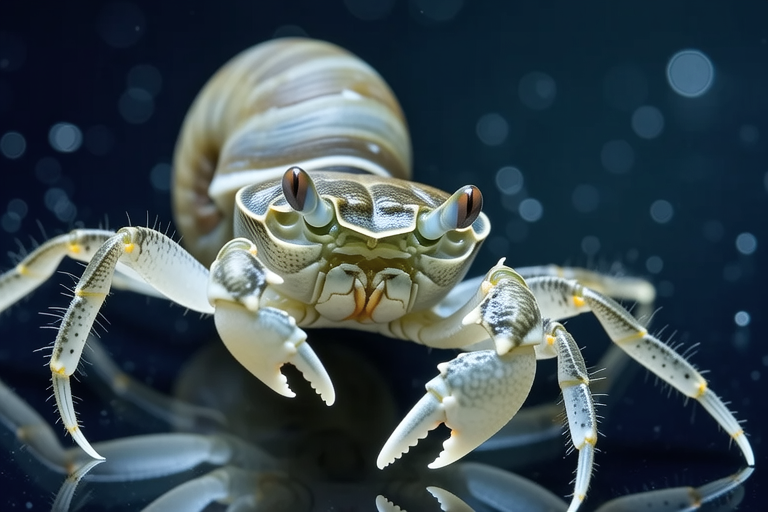
The Fascinating World of Pea Crabs
Pea crabs, members of the family Pinnotheridae, are some of the most intriguing creatures in the ocean. Despite their name, these crabs are far from the garden variety. They are microscopic in size, living within the gill chambers of bivalves like oysters, mussels, and clams. Their unique lifestyle has made them a subject of fascination for marine biologists, and their symbiotic relationships with their hosts have shed light on the complex interactions within marine ecosystems.
Microscopic Size and Unique Habitat
Pea crabs are indeed tiny, typically measuring less than half an inch in length. Their diminutive size allows them to fit snugly inside the gill chambers of their hosts, where they find protection and food. The crabs are perfectly adapted to this niche, with flattened bodies that allow them to maneuver through the intricate spaces within the bivalve’s shell. This lifestyle is known as endosymbiosis, where one organism lives inside another.
Their hosts, primarily bivalves, provide a safe haven for the pea crabs. These mollusks filter feed by drawing water into their bodies and extracting nutrients. Pea crabs benefit from this setup, feeding on the detritus and microorganisms that the bivalves filter out. In return, the crabs offer some protection against predators, as their presence can deter potential threats from attacking the host. This mutualistic relationship is crucial for both parties’ survival.
Anatomy and Adaptations
Despite their small size, pea crabs possess a surprisingly complex anatomy. Their bodies are flattened and oval-shaped, with large, rounded eyes positioned at the front of their heads. They have five pairs of legs, with the first pair modified into pincers used for feeding and defense. The remaining four pairs are used for walking and swimming within the host’s gill chamber.
The crabs’ exoskeletons are soft and flexible, allowing them to fit comfortably within the narrow confines of their hosts. This flexibility also helps them avoid damage when the bivalve closes its shell. Additionally, pea crabs have developed a specialized sensory system that enables them to detect changes in water flow and chemical signals, helping them navigate their environment and locate food.
One of the most remarkable adaptations of pea crabs is their ability to reproduce within the host’s body. Females carry their eggs internally until they hatch, after which the larvae are released into the surrounding water. This ensures that the next generation is born close to a potential host, increasing their chances of survival.
Life Cycle and Reproduction
The life cycle of pea crabs begins with the release of larvae from the mother’s body. These tiny, planktonic larvae drift in the ocean currents, searching for a suitable host. Once they find a bivalve, they enter its gill chamber and undergo metamorphosis, transforming into juvenile crabs. As they grow, they continue to live within the host, feeding on the detritus and microorganisms filtered by the bivalve.
Adult pea crabs reach sexual maturity after about a year, at which point they begin reproducing. Mating occurs within the host, with the male crab fertilizing the female’s eggs. After fertilization, the female carries her eggs internally until they hatch. The entire process is carefully timed to ensure that the offspring are born when conditions are optimal for survival.
The lifespan of pea crabs varies depending on species and environmental factors, but most live for around two years. During this time, they play a vital role in the marine ecosystem, contributing to nutrient cycling and providing a source of food for larger predators.
Symbiotic Relationships
The symbiotic relationship between pea crabs and their bivalve hosts is a classic example of mutualism. While the crabs benefit from protection and a steady supply of food, the bivalves gain protection from predators and parasites. Some studies suggest that the presence of pea crabs may even improve the host’s reproductive success, as the crabs consume parasites that could otherwise harm the bivalve.
In addition to their primary hosts, pea crabs have been observed living alongside other marine organisms, including sea cucumbers and sea anemones. These alternative hosts provide additional opportunities for the crabs to thrive, expanding their range and increasing their chances of survival. However, the relationship between pea crabs and these secondary hosts is less well understood and requires further research.
Role in Marine Ecosystems
Pea crabs play a crucial role in marine ecosystems, contributing to nutrient cycling and serving as a food source for larger predators. By feeding on detritus and microorganisms, they help break down organic matter and recycle nutrients back into the ecosystem. This process is essential for maintaining the health and productivity of marine environments.
Furthermore, pea crabs serve as a food source for a variety of predators, including fish, birds, and other crustaceans. Their presence in the ecosystem supports the growth and reproduction of these larger organisms, contributing to the overall biodiversity of the region. Despite their small size, pea crabs are integral to the functioning of marine ecosystems, and their disappearance could have significant consequences for the organisms that depend on them.
Recent Scientific Discoveries
In recent years, scientists have made several exciting discoveries about pea crab biology. One of the most notable findings is the identification of new species within the family Pinnotheridae. Researchers have discovered several previously unknown species, expanding our understanding of the diversity and distribution of these fascinating creatures.
Another area of active research is the genetic basis of pea crab adaptation. Scientists are investigating how these crabs have evolved to live within the gill chambers of bivalves, focusing on the genes responsible for their flexible exoskeletons and specialized sensory systems. Understanding these adaptations could provide insights into the evolution of other symbiotic relationships within marine ecosystems.
Additionally, researchers are exploring the potential impact of climate change on pea crab populations. Rising ocean temperatures and acidification could alter the availability of suitable hosts and affect the crabs’ ability to reproduce. Studying these effects is crucial for predicting how pea crabs will respond to changing environmental conditions and for developing strategies to protect these important organisms.
Conclusion
Pea crabs are truly remarkable creatures, with their tiny size, unique habitat, and intricate symbiotic relationships making them a fascinating subject of study. Their adaptations to life within bivalves and their role in marine ecosystems highlight the complexity and interconnectedness of life in the ocean. As we continue to explore the world of pea crabs, we gain a deeper appreciation for the incredible diversity of life on Earth and the importance of protecting marine environments.
