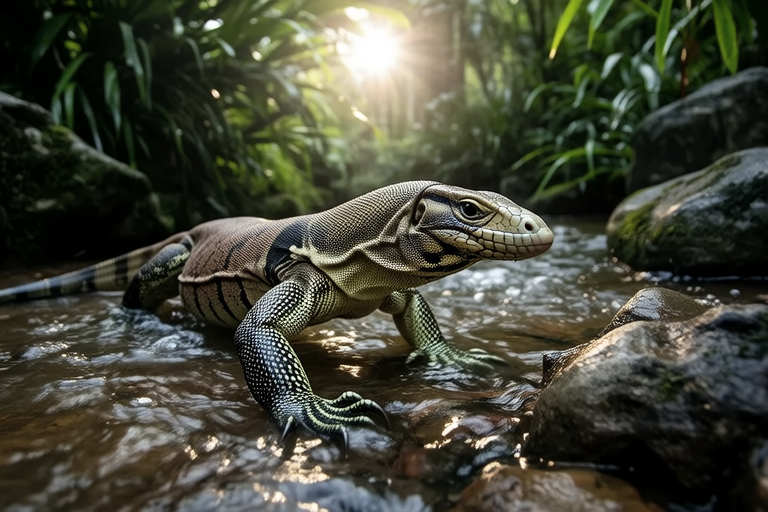
Exploring the World of Water Monitors
The water monitor (Varanus salvator) is one of the most fascinating reptiles on Earth. Known for its remarkable agility, diverse diet, and complex interactions within its ecosystem, this species has captivated the attention of biologists and nature enthusiasts alike. With an impressive range spanning from India to Southeast Asia, these creatures have adapted to thrive in both aquatic and terrestrial environments.
Physical Adaptations for Survival
Water monitors are among the largest lizards in the world, reaching lengths of up to three meters. Their long, powerful tails serve multiple purposes: propulsion through water, balance while climbing, and as a weapon against predators. The tail’s muscular structure allows it to swim efficiently and maneuver swiftly in rivers and mangrove swamps. Their strong limbs and sharp claws enable them to climb trees with ease, providing access to both high ground and potential prey.
One of the most striking features of water monitors is their keen eyesight and excellent sense of smell. These senses help them locate food sources and avoid danger. Their nostrils are positioned high on their snouts, allowing them to breathe easily while partially submerged. Additionally, water monitors possess a forked tongue that helps them detect chemical signals in the air, aiding in navigation and hunting.
Diet and Feeding Habits
Water monitors are opportunistic omnivores, feeding on a wide variety of animals, plants, and fruits. Their diet includes insects, fish, amphibians, birds, small mammals, eggs, and carrion. This adaptability ensures that they can find sustenance even in harsh conditions. Studies have shown that water monitors play a crucial role in controlling rodent populations, which benefits farmers by reducing crop damage.
These lizards employ various hunting strategies depending on their environment. In water, they use their speed and stealth to catch fish and amphibians. On land, they rely on their sharp senses to ambush prey or scavenge for food. Their ability to open their jaws wide allows them to swallow large prey whole, while their strong digestive system breaks down tough materials like bones and shells.
Intelligence and Problem-Solving Skills
Water monitors exhibit impressive cognitive abilities, often outsmarting their human caretakers. Anecdotal evidence suggests that they can recognize familiar faces and respond to specific commands. One notable example involves a water monitor named “George” who lived at a zoo in Singapore. George quickly learned to associate certain sounds with feeding times, prompting him to approach his enclosure door whenever he heard those particular noises.
Researchers have also observed water monitors using tools in the wild. For instance, some individuals have been seen breaking open turtle shells by dropping them from great heights onto rocks below. This behavior demonstrates not only strength but also strategic thinking. Furthermore, water monitors display curiosity and playfulness when interacting with objects around them, further indicating advanced mental capabilities.
Wild vs Domesticated Behavior
While wild water monitors tend to be more cautious and secretive, those kept in captivity often develop personalities based on individual experiences. In the wild, they prefer isolated areas where they can hunt undisturbed and hide from potential threats. However, once acclimated to human presence, captive water monitors may become more social and interactive.
In zoos and private collections, water monitors sometimes form bonds with their handlers over time. They may follow familiar people around exhibits or seek attention through gentle nudges or vocalizations. Despite this apparent friendliness, it’s important to remember that these animals remain wild at heart and should always be treated with respect.
Conservation Efforts and Threats
Despite their widespread distribution, water monitors face numerous challenges in the wild. Habitat destruction due to deforestation and urbanization poses significant risks to their survival. Many populations inhabit coastal regions vulnerable to rising sea levels caused by climate change. Additionally, illegal poaching for meat, skins, and traditional medicine continues to threaten this species.
Various organizations are working tirelessly to protect water monitors and their habitats. Conservation programs focus on raising awareness about the importance of preserving natural ecosystems and promoting sustainable practices among local communities. Some initiatives involve releasing captive-bred individuals into protected areas to bolster dwindling populations.
To ensure the future of these magnificent creatures, it’s essential for everyone to contribute positively towards environmental protection. By supporting conservation efforts and making conscious choices regarding resource consumption, we can help maintain healthy ecosystems for all wildlife, including water monitors.
