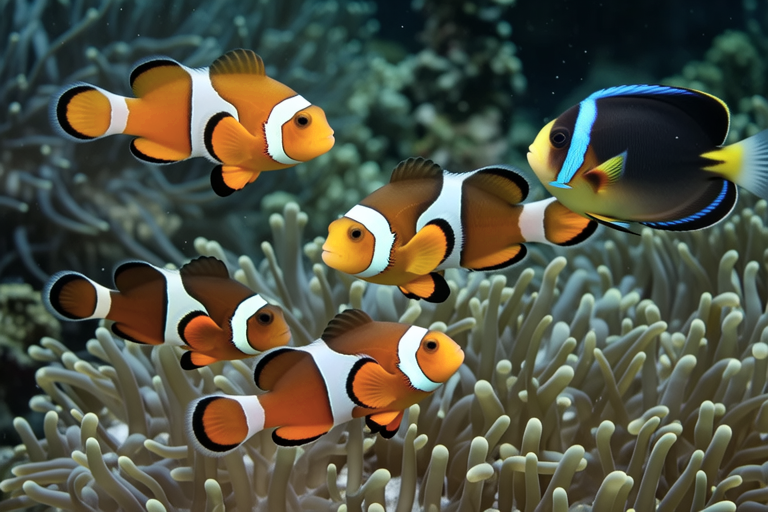
Exploring the Diverse World of Clownfish
Clownfish, often associated with the character Nemo from the animated film Finding Nemo, belong to the family Amphiprioninae. This group comprises 30 recognized species, all native to the tropical waters of the Indo-Pacific region. Each species has unique characteristics, habitats, and behaviors that set them apart from one another, as well as from the fictional Nemo. This article delves into the rich biodiversity of clownfish, highlighting their roles within the marine ecosystem, their symbiotic relationships with sea anemones, and their remarkable adaptability to various environments.
The Diversity of Clownfish Species
Amphiprion ocellaris: The True Nemo

The true Nemo, Amphiprion ocellaris, or the false clownfish, is perhaps the most famous among its kin. These fish are known for their striking white stripes on an orange body, with three distinct black bands. They live in the warm waters of the Indian and Pacific Oceans, particularly around coral reefs. Unlike the adventurous Nemo, A. ocellaris are relatively sedentary, rarely venturing far from their anemone homes. Their behavior is more subdued, focusing on survival within their protected environment.
One interesting fact about A. ocellaris is their ability to change sex. They are sequential hermaphrodites, meaning they start their lives as males and can later become females if there is no dominant female in the group. This adaptation ensures reproductive success within their small communities.
Amphiprion percula: The Orange Clownfish

The orange clownfish, Amphiprion percula, closely resembles A. ocellaris but has a slightly different distribution. It is found in the waters surrounding Australia and Papua New Guinea. A. percula is also known for its vibrant orange coloration and three white stripes. This species prefers the same type of anemone as A. ocellaris, and their relationship with sea anemones is crucial for their survival.
Scientific studies have shown that A. percula’s relationship with sea anemones is mutually beneficial. The anemones provide protection from predators, while the clownfish offer nutrients through their waste and attract potential prey. This symbiotic relationship is a prime example of coevolution in marine ecosystems.
Amphiprion melanopus: The Clark’s Anemonefish

Amphiprion melanopus, commonly known as Clark’s anemonefish, is distinguished by its brownish-orange color and two white stripes. This species is widely distributed across the Indo-Pacific region, including the Red Sea and the Great Barrier Reef. Clark’s anemonefish is particularly adaptable, living in various types of sea anemones, including Heteractis magnifica and Stichodactyla gigantea.
An intriguing aspect of A. melanopus is its role in maintaining the health of its anemone host. By removing parasites and keeping the anemone clean, this species helps ensure the longevity of both partners in the symbiotic relationship.
Differences Between Real and Fictional Clownfish
While Nemo from Finding Nemo shares many characteristics with real clownfish, such as his vibrant coloring and association with sea anemones, he differs significantly in terms of behavior and habitat. In the film, Nemo embarks on an adventurous journey across the ocean, encountering various dangers and meeting new friends along the way. In reality, clownfish are much more cautious and seldom leave the safety of their anemone homes.
Another difference lies in the social structure of clownfish groups. In the movie, Nemo and his father Marlin are portrayed as the only members of their group. In nature, however, clownfish typically live in small communities, with one dominant female and several males. The female is responsible for egg-laying and protecting the young, while the males help care for the eggs and defend the territory.
The Role of Clownfish in Marine Ecosystems
Clownfish play vital roles within their marine ecosystems. As herbivores, they contribute to the balance of coral reef communities by grazing on algae and other plant material. Their symbiotic relationship with sea anemones also supports the overall health of reef systems. By providing protection and nutrients, clownfish help maintain the delicate equilibrium necessary for the survival of both themselves and their hosts.
Moreover, clownfish serve as important indicators of environmental health. Changes in their populations can signal shifts in the broader marine ecosystem, making them valuable subjects for ecological research.
Symbiotic Relationships with Sea Anemones
The relationship between clownfish and sea anemones is one of the most fascinating examples of mutualism in the animal kingdom. Sea anemones are stationary animals that lack mobility, making them vulnerable to predation. Clownfish, on the other hand, are small and agile, able to escape many threats. By living within the tentacles of an anemone, clownfish gain protection from predators, while the anemone benefits from the nutrients provided by the clownfish.
Recent scientific studies have revealed that the mucus coating on clownfish skin contains compounds that protect them from the stinging cells of the anemone. This adaptation allows clownfish to move freely among the tentacles without harm, enabling them to thrive in their chosen habitat.
Adaptability to Various Environments
Despite their close association with sea anemones, clownfish have demonstrated remarkable adaptability to different environments. Some species, like the tomato clownfish (Amphiprion frenatus), can survive in areas where suitable anemone hosts are scarce. These fish have been observed associating with soft corals, sponges, and even artificial structures like shipwrecks.
This adaptability highlights the resilience of clownfish in the face of changing conditions. As human activities continue to impact marine environments, understanding the adaptability of these species is crucial for conservation efforts.
Interesting Facts About Clownfish
- Clownfish are highly territorial and will aggressively defend their anemone homes against intruders.
- The largest clownfish species, the maroon clownfish (Premnas biaculeatus), can grow up to 14 cm in length.
- Clownfish can communicate with each other through a series of grunts and pops produced by vibrating their swim bladders.
- The lifespan of clownfish in the wild is estimated to be around 6-10 years, though some individuals may live longer under optimal conditions.
By exploring the diversity of clownfish species, we gain a deeper appreciation for the complexity and richness of marine life. Each species contributes uniquely to its ecosystem, offering valuable insights into the interconnectedness of life beneath the waves.
Conclusion
From the iconic A. ocellaris to the lesser-known species like A. melanopus, clownfish offer a captivating glimpse into the world of marine biodiversity. Their unique characteristics, behaviors, and roles within the ecosystem make them fascinating subjects of study. Understanding the intricate relationships between clownfish and their anemone hosts, as well as their adaptability to various environments, provides valuable lessons about the importance of conservation and the delicate balance of marine ecosystems.
