Heterometrus spinifer: The Enigmatic Spider
The Heterometrus spinifer, commonly known as the spiny forest scorpion, is an intriguing member of the arachnid family. This article delves into the classification, native habitats, physical characteristics, behavior, diet, and the myths surrounding its danger to humans. Additionally, recent research and conservation efforts concerning this fascinating creature are discussed.
Classification Within Arachnids
Heterometrus spinifer belongs to the class Arachnida, which includes spiders, scorpions, mites, and ticks. It is part of the order Scorpiones and the family Scorpionidae. As a member of the genus Heterometrus, it shares several common traits with other scorpions, such as a segmented body, eight legs, and a pair of pincers. However, its unique spiny legs set it apart from other species within its genus.
Native Habitats
This species is native to Southeast Asia, particularly found in countries like India, Sri Lanka, and parts of Malaysia. They inhabit tropical rainforests, where they seek shelter under rocks, logs, and leaf litter. These environments provide ample hiding spots and prey for the spiny forest scorpion.
Physical Characteristics
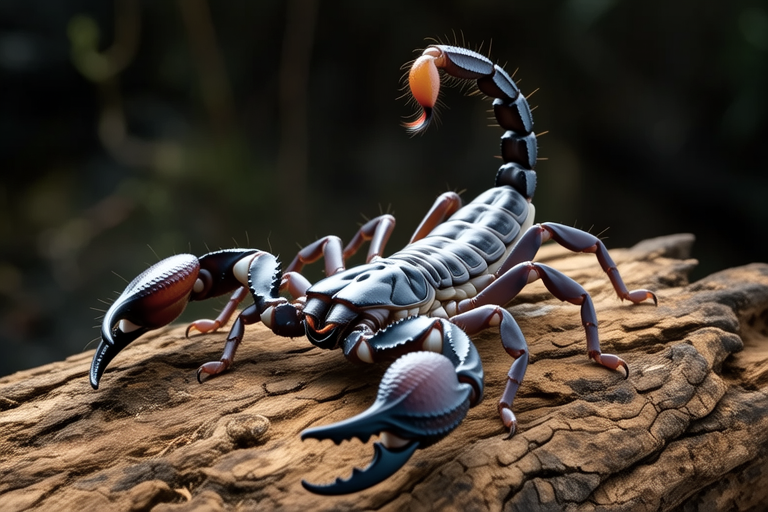
The Heterometrus spinifer is distinguishable by its robust body, which can grow up to 10 cm in length. Its most striking feature is the presence of pronounced spines along its legs, which give it its name. These spines serve multiple purposes, including defense against predators and assistance in capturing prey. The spiny forest scorpion also has a large, curved tail equipped with a venomous stinger at the end.
Distinguishing Features
Compared to other spiders, the Heterometrus spinifer exhibits several distinctive features. Firstly, its spiny legs are unique among scorpions, providing an effective means of defense and hunting. Secondly, the structure of its claws (pedipalps) is adapted for grasping and holding onto prey securely. Lastly, its coloration, typically ranging from dark brown to black, helps it blend into its surroundings, making it difficult for both predators and prey to detect.
Behavior
The spiny forest scorpion is primarily nocturnal, emerging at night to hunt for food. During the day, it remains hidden in crevices or burrows to avoid dehydration and predation. This species is solitary and territorial, defending its space against intruders. Males engage in ritualistic combat during mating season, using their powerful pincers to establish dominance over rivals.
Diet
The diet of the Heterometrus spinifer consists mainly of insects, earthworms, and small vertebrates. It uses its keen sense of smell and touch to locate potential prey, often ambushing them when they come too close. Once caught, the scorpion injects venom through its stinger to immobilize the victim before consuming it whole.
Hunting Techniques
In addition to ambush tactics, the spiny forest scorpion employs a unique hunting technique involving vibrations. By sensing subtle movements in the ground or vegetation, it can accurately pinpoint the location of unsuspecting prey. This ability allows it to catch prey even in complete darkness.
Myths Versus Facts About Danger to Humans
Despite popular belief, the venom of the Heterometrus spinifer is generally considered non-lethal to humans. While a sting may cause localized pain, swelling, and redness, severe reactions are rare. However, individuals with allergies or compromised immune systems should exercise caution. Medical attention should be sought if symptoms persist or worsen.
Recent Research and Discoveries
Recent studies have shed light on the chemical composition of the venom produced by the Heterometrus spinifer. Researchers have identified various peptides and proteins responsible for its paralyzing effects on prey. Understanding these components could lead to new developments in medicine, particularly in fields related to neurology and pain management. Furthermore, ongoing investigations aim to uncover additional ecological roles played by this species within its ecosystem.
Conservation Status and Threats
The International Union for Conservation of Nature (IUCN) has listed the Heterometrus spinifer as Least Concern due to its wide distribution across Southeast Asia. However, deforestation, urbanization, and climate change pose significant threats to its habitat. As forests continue to shrink, suitable living spaces for these creatures diminish, increasing competition for resources and reducing population sizes.
What Readers Can Do to Help Protect This Species
To contribute towards preserving the Heterometrus spinifer, individuals can support local conservation organizations working to protect natural habitats. Engaging in sustainable practices, such as recycling and reducing waste, helps mitigate environmental degradation caused by human activities. Additionally, raising awareness about the importance of biodiversity encourages others to take action in safeguarding endangered species.
