Parrot Fish: The Colorful Guardians of Marine Ecosystems
Introduction
Parrot fish are one of the most visually striking inhabitants of coral reefs, known for their vibrant colors and unique appearance. These marine creatures play a crucial role in maintaining the health of coral reefs, which are essential for the survival of countless species. This article will explore the colorful world of parrot fish, their feeding habits, reproduction methods,面临的威胁以及保护措施, and their significance to marine ecosystems.
The Vibrant Colors and Unique Appearance of Parrot Fish
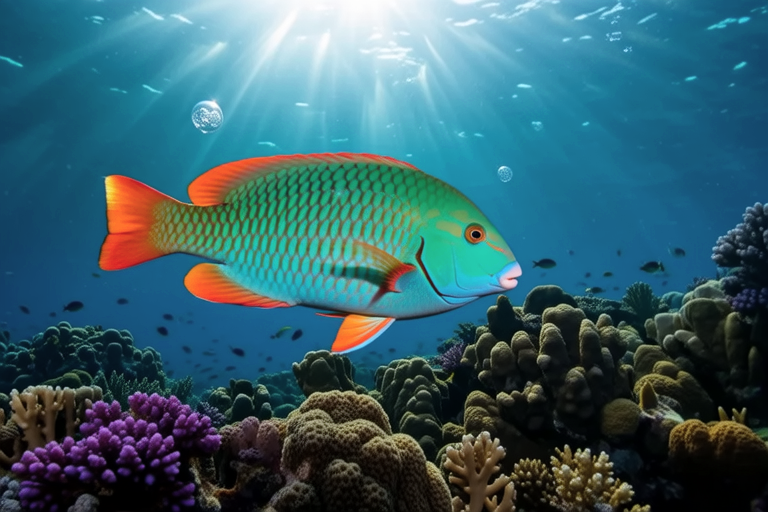
Parrot fish are renowned for their dazzling array of colors and patterns. Their bodies are often adorned with hues of blue, green, yellow, red, and orange, creating a mesmerizing spectacle under the ocean’s surface. Some species, such as the queen parrotfish (Scarus vetula), exhibit striking shades of pink and purple. The vivid colors of parrot fish serve multiple purposes, including camouflage, communication, and attracting mates.
In addition to their vibrant colors, parrot fish possess several unique physical features. They have beak-like mouths, equipped with rows of sharp teeth that allow them to scrape algae off coral reefs. Their large, fleshy lips help them grip onto surfaces while feeding. Another distinctive characteristic is their ability to change color and pattern, depending on their age, gender, and social status. For instance, juvenile parrot fish may appear duller in color compared to adults, while males often display brighter hues during mating season.
The Role of Parrot Fish in Maintaining Coral Reef Health
Coral reefs are some of the most diverse and productive ecosystems on Earth, supporting approximately 25% of all marine life. However, these delicate habitats face numerous threats, including climate change, pollution, and overfishing. Parrot fish play a vital role in preserving coral reefs by controlling the growth of algae, which can otherwise smother and kill corals if left unchecked.
When parrot fish feed on algae, they also consume small pieces of coral, which pass through their digestive systems and are excreted as sand. This process, known as bioerosion, helps maintain the structural integrity of coral reefs and contributes to the formation of new beaches. In fact, it has been estimated that a single large parrot fish can produce up to 90 kilograms of sand per year. By keeping algae populations in check and contributing to the creation of new habitats, parrot fish are essential for the long-term survival of coral reefs.
Feeding Habits of Parrot Fish
Parrot fish are primarily herbivorous, feeding on a diet of algae, seagrass, and other plant matter found on coral reefs. Using their strong beaks and teeth, they scrape away layers of algae from rocks, coral, and other surfaces. This feeding behavior not only provides them with nutrition but also helps prevent the overgrowth of algae, which can compete with corals for space and light.
Some species of parrot fish have adapted to consume different types of food sources. For example, the stoplight parrotfish (Sparisoma viride) feeds mainly on sponges, while others may occasionally eat small invertebrates or detritus. Despite their varied diets, all parrot fish contribute to the overall health of coral reefs by regulating algal populations and promoting biodiversity.
Reproduction Methods of Parrot Fish
Parrot fish reproduce through a process called broadcast spawning, where females release thousands of eggs into the water column simultaneously, while males release clouds of sperm to fertilize them. This method increases the chances of successful fertilization and reduces predation on individual eggs.
Many species of parrot fish exhibit complex mating behaviors, including courtship rituals and territorial displays. Some males will establish harems, defending multiple females within their territory. Others may form monogamous pairs, staying together throughout the breeding season. After spawning, the fertilized eggs float in the water column for several days before hatching into larvae. These tiny fish then drift with ocean currents until they find suitable habitats to settle in.
面临的威胁
尽管鹦嘴鱼对珊瑚礁生态系统至关重要,但它们正面临着许多威胁。过度捕捞是最大的威胁之一,因为它们的肉和鲜艳的颜色使它们成为受欢迎的捕捞目标。此外,栖息地破坏、气候变化以及污染也对这些鱼类构成了威胁。随着全球变暖导致海洋温度升高,酸化加剧,珊瑚礁正在退化,这对依赖珊瑚礁生存的鹦嘴鱼造成了影响。
栖息地破坏也是鹦嘴鱼面临的一个重要问题。由于人类活动的影响,许多珊瑚礁被破坏或摧毁,这使得鹦嘴鱼失去了重要的食物来源和繁殖场所。此外,沿海开发、港口建设以及其他人类活动也会导致水质恶化,进一步威胁到这些鱼类的生存。
为了应对这些威胁,采取有效的保护措施至关重要。建立海洋保护区可以为鹦嘴鱼提供安全的栖息地,并有助于恢复受损的珊瑚礁。此外,加强渔业管理,限制捕捞数量和规模,也有助于保护这些美丽的鱼类。公众教育同样重要,提高人们对鹦嘴鱼及其生态角色的认识,鼓励人们采取环保行动。
保护措施
To address these threats, several conservation efforts are underway. Establishing marine protected areas (MPAs) can provide safe havens for parrot fish and aid in the recovery of damaged coral reefs. MPAs restrict human activities such as fishing, mining, and construction, allowing ecosystems to regenerate naturally. Additionally, implementing sustainable fishing practices, such as limiting catch sizes and protecting spawning grounds, can help ensure the long-term survival of parrot fish populations.
Public education plays a crucial role in raising awareness about the importance of parrot fish and their ecological roles. By informing people about the threats facing these vibrant creatures and encouraging environmentally responsible behavior, we can foster a greater appreciation for marine biodiversity. Engaging communities in conservation initiatives, such as citizen science projects and beach cleanups, can also promote stewardship of our oceans.
Conclusion
Parrot fish are not only beautiful to behold but also play an indispensable role in maintaining the health of coral reefs. Their vibrant colors and unique appearance make them stand out among other marine species, while their feeding habits and reproductive methods highlight their adaptability and resilience. However, these remarkable creatures face numerous challenges, including overfishing, habitat destruction, and climate change. By understanding the significance of parrot fish to marine ecosystems and taking action to protect them, we can help ensure the continued survival of these colorful guardians of the sea.
